The short answer
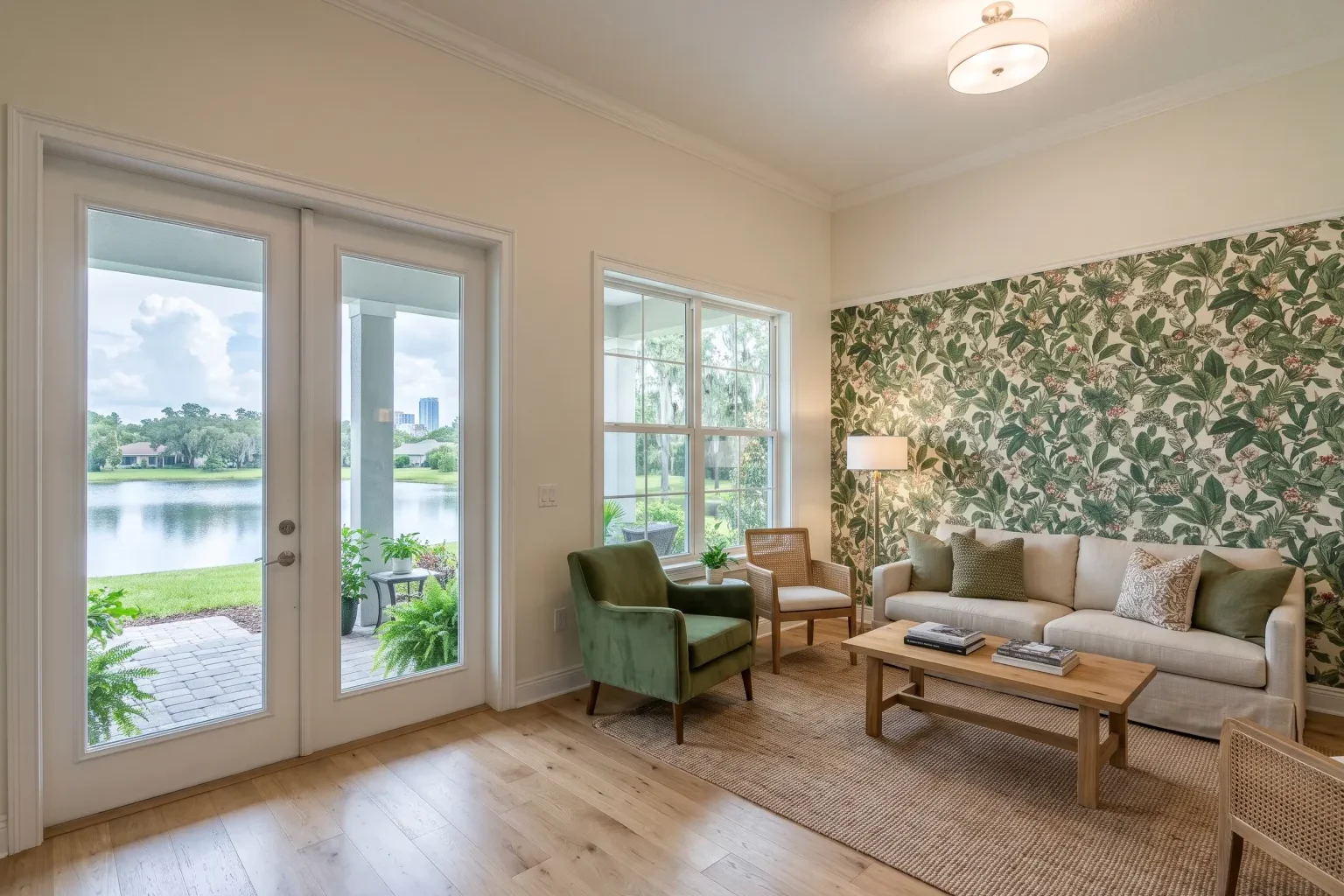
Wallpaper is a strong choice for living rooms, bedrooms, dining rooms, entries and powder rooms where you want pattern or texture that paint cannot deliver. A clean professional job starts with repaired, primed walls, then careful measuring, plumb layout, matched patterns, tight seams and precise trimming.
Good wallpaper changes a room more than almost any other finish, and bad installation undoes that just as quickly. Crooked patterns, visible seams, gaps at the ceiling and bubbles that dry into blisters are the things people notice first. Specialist Wallpaper Installer hangs traditional and modern wallpapers for homeowners in Orlando and nearby cities, from a single statement wall in a newer two-story stucco home to full rooms of patterned paper in a mid-century block ranch. On this page we cover how to decide if wallpaper fits your room, the prep and priming involved, the steps of a professional hang, what changes the cost of a project and how to look after the result.
Is wallpaper the right finish for this room?
Wallpaper is worth it where a room needs character. A narrow entry hall gains depth from a large pattern, a dining room feels more intimate with a rich print, and a small powder room can carry a bold design that would overwhelm a larger space. Bedrooms often get a single accent wall behind the headboard.
Consider how the room is used before picking a material. Standard printed papers suit living areas and bedrooms. Nonwoven papers are easier to remove later and handle minor wall movement well. Vinyl-coated options belong in kitchens, laundry rooms and kids' rooms. In rooms with constant steam or poor airflow, plain paper may not last, and we will tell you if a space is better suited to a different covering.
Our climate plays a role too. With hot, humid summers, we prefer to install in a room that is already air conditioned, and we avoid hanging paper on walls with known moisture issues until they are fixed.
Prep and priming
Before we unroll a single bolt, we look at the wall in angled light, take moisture readings on exterior walls and identify repairs. Typical prep includes removing old wallpaper, washing off residue, patching holes and cracks, sealing torn drywall and smoothing texture with a skim coat when needed.
Then we roll on a wallcovering primer. It gives paste an even surface to bond to, lets us slide each strip into alignment before it grabs and protects the drywall when the paper is eventually removed. Under light-colored or thin papers, we tint the primer so patches and old paint colors do not show through.
Step-by-step installation
A careful hang follows a set order. Each step depends on the one before it.
- Measure: we measure every wall's height and width, count openings and calculate rolls with the pattern repeat in mind, so you order enough paper from the same run.
- Check the rolls: we confirm matching run numbers, inspect for print defects and note the match type, whether straight, drop or random.
- Plan the layout: we decide where to start so the pattern centers on a focal point, such as a fireplace or bed wall, and so the final mismatched seam lands in an inconspicuous corner.
- Set a plumb line: a laser or level gives a true vertical, since walls and corners are rarely straight.
- Paste and book: we paste the paper or the wall per the manufacturer and let strips relax so they do not shrink on the wall and open seams.
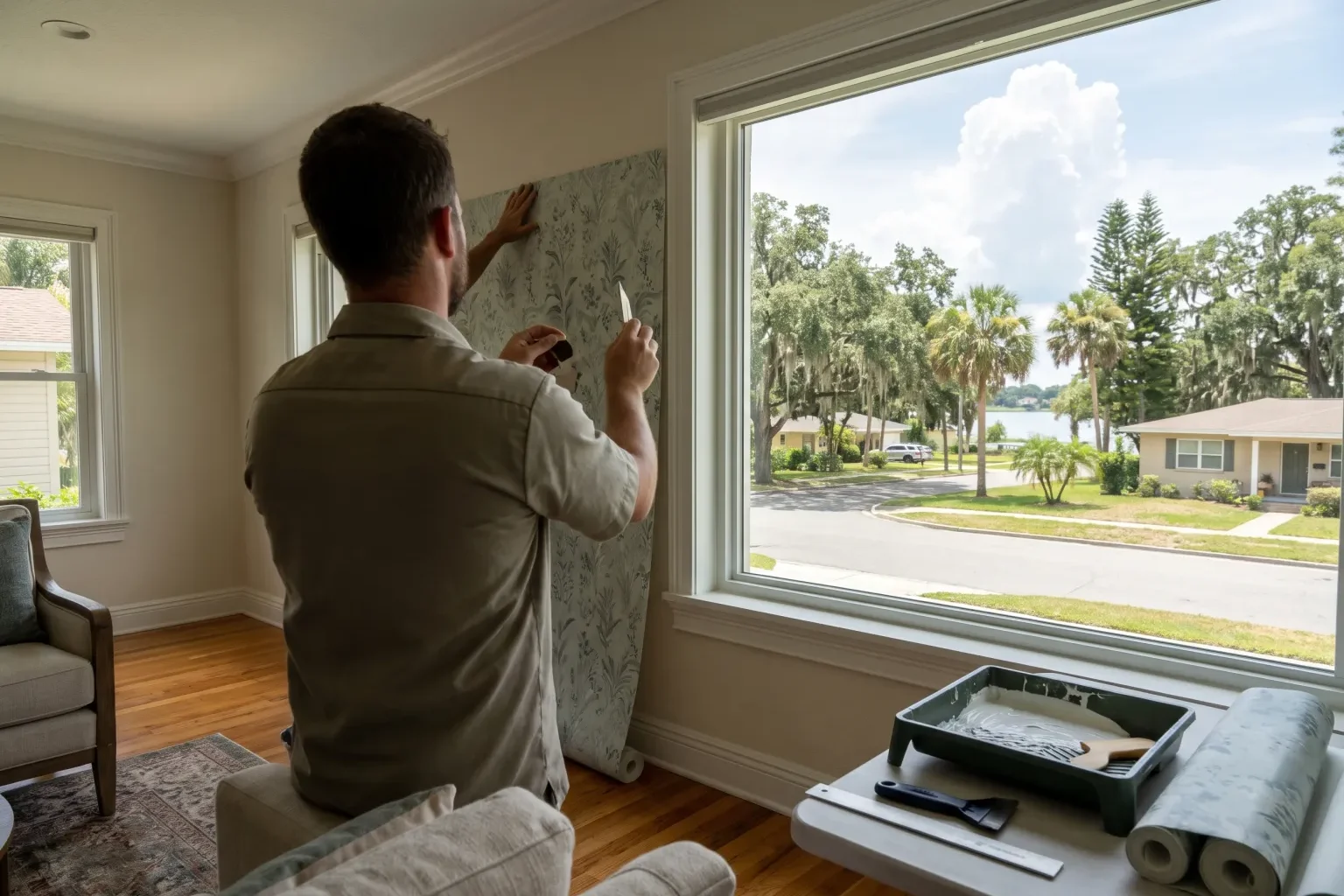
- Hang and match: each strip is aligned at the pattern, butted tight at the seam, and smoothed from the center out to remove air.
- Roll and clean: seams are gently rolled where appropriate and any paste is sponged off the face right away.
- Trim: we cut cleanly at ceilings, baseboards, windows, doors and outlets with a sharp blade and straightedge.
What affects the cost of wallpaper installation
We quote each project individually. Wall condition has the biggest influence: a smooth, painted wall needs little prep, while stripping old paper, repairing damage or skim coating adds labor and drying time.
Paper type matters. Thick nonwoven papers are fast to hang, while delicate hand-printed papers, metallics, flocks and papers that need trimming of selvage edges take longer. Pattern repeat affects both labor and how many rolls you need, since large or drop-match repeats waste more paper.
Room size and ceiling height complete the picture. Vaulted ceilings, stairwells and two-story foyers require scaffolding, and rooms with many windows, built-ins and outlets require more cuts.
Getting ready for install day
A little planning on your side makes the visit smoother. Order all of your rolls at once and keep them in the house, not in a hot garage or a car trunk, because heat and humidity can warp the paper and make the edges curl before they ever reach the wall. Leave the boxes unopened until we arrive so we can check run numbers together.
If painters or other trades are working in the same room, schedule them first. Ceiling paint, trim paint and any electrical work should be finished before paper goes up, since drips and patching afterward are hard to hide. Fresh wall paint needs time to cure before it is primed for paper.
On the day itself, we ask for clear access to the walls, a nearby sink or hose bib for clean water and a way to keep pets out of the work area. The air conditioning should stay on and set to a steady temperature through installation and for a couple of days after, which helps the paste dry evenly and keeps seams from shrinking open. Afterward, keep heavy furniture a few inches off the new walls until everything has fully set, and resist the urge to pull at a damp edge; most small bubbles flatten on their own as the paste dries overnight.
Caring for your wallpaper
Give the paste a few days to cure before hanging artwork. Dust with a soft, dry cloth or a vacuum brush. For washable papers, use a damp sponge with mild soap and rinse; for nonwashable papers, blot spots gently and avoid rubbing.
Keep humidity under control with air conditioning and exhaust fans, and watch for leaks after heavy storms. Store a leftover roll so small repairs later can match the original run.
Wallpaper Installation by city
- Wallpaper Installation in EdgewoodLocal service & repairs
- Wallpaper Installation in Belle IsleLocal service & repairs
- Wallpaper Installation in WindermereLocal service & repairs
- Wallpaper Installation in Lake Buena VistaLocal service & repairs
- Wallpaper Installation in Winter ParkLocal service & repairs
- Wallpaper Installation in KissimmeeLocal service & repairs
- Wallpaper Installation in EatonvilleLocal service & repairs
- Wallpaper Installation in MaitlandLocal service & repairs
- Wallpaper Installation in OcoeeLocal service & repairs
- Wallpaper Installation in Bay LakeLocal service & repairs
- Wallpaper Installation in Winter GardenLocal service & repairs
- Wallpaper Installation in Sky LakeLocal service & repairs